Author: Brody Pennell

Heat Pump vs. Furnace: Which Is a Smarter Choice for a Los Angeles Winter?

When it comes to choosing a new heating system in Los Angeles, homeowners often compare two main options: heat pumps and traditional gas furnaces. While both systems can keep your home comfortable, LA’s mild winter climate and California’s electrification trends make this decision more nuanced than what you’ll find in national heating guides.

Understanding LA’s Climate: A Major Factor in Your Decision

Los Angeles winters rarely drop below 45°F, making it one of the mildest heating climates in the country. This gives heat pumps a major performance advantage, because they operate most efficiently when outdoor temperatures stay above freezing. Unlike cold-climate regions where heat pumps can struggle in sub-zero temperatures, LA homeowners experience ideal operating conditions for this technology almost all winter long.

Gas furnaces remain reliable and powerful, but their benefits are often more applicable in regions with harsh winters, something Angelinos simply don’t face.

Local Cost Analysis: Heat Pumps vs. Furnaces in Los Angeles

Here’s where national articles often fall short: local utility prices matter a lot.

SoCalGas (Natural Gas) Estimates

  • Average rate: $1.65 per therm

  • Typical LA winter heating usage: 20–35 therms/month

  • Monthly furnace energy cost: $33–$58

LADWP Electricity Estimates

  • Average electricity rate: 27¢ per kWh

  • High-efficiency heat pump usage in LA winter: 250–450 kWh/month

  • Monthly heat pump cost: $67–$121

Heat pumps may have higher operating costs based strictly on winter heating, but they pay off in other ways; especially cooling. Since a heat pump is both your heater and air conditioner, its efficiency in summer becomes part of the overall value equation.

Upfront Installation Cost

A heat pump system generally costs more upfront, especially because it replaces both the heating and cooling equipment. However, many LA homeowners prefer this all-in-one solution because it provides year-round comfort with a single high-efficiency system.

A gas furnace typically costs less to install if you keep your existing AC system in place. For older homes with established gas infrastructure, this option can feel more budget-friendly in the short term.

Efficiency in Mild Temperatures: LA’s Secret Heat Pump Advantage

One of the biggest myths in HVAC is that heat pumps aren’t efficient for heating. In Los Angeles, the opposite is true.

Heat pumps use electricity to transfer heat, not generate it, meaning they can produce 2–3 times more heat energy than the electricity they consume. This ratio, known as the HSPF2 rating, makes heat pumps incredibly efficient in mild climates like LA.

Even if the winter heating cost is slightly higher, the efficiency gains in summer cooling often offset that difference. Homeowners who use their AC heavily will usually see lower total annual utility costs with a heat pump.

California’s Electrification Trend: Why It Matters for Your Choice

California continues to move toward an all-electric future, encouraging homes and businesses to reduce reliance on natural gas. Many cities, including some in LA County, are already adopting electrification-friendly building codes.

Heat pumps fit directly into this statewide initiative, offering:

  • Lower carbon emissions

  • Eligibility for potential rebates and incentives

  • Better long-term alignment with future regulations

Choosing a heat pump today can be a proactive move that keeps your home ahead of upcoming environmental standards.

Which Is the Smarter Choice for a Los Angeles Home?

Choose a heat pump if you want:

  • A highly efficient all-in-one heating and cooling system

  • Lower summer cooling bills

  • Better environmental performance

  • Future-proof technology that aligns with California’s direction

Choose a gas furnace if you prioritize:

  • The lowest upfront cost

  • The lowest winter heating cost

  • Using your existing gas infrastructure

Talk to the LA HVAC Experts at Brody Pennell

Every home is different, and the best choice depends on your comfort preferences, energy usage, and long-term priorities. As Los Angeles’ most trusted HVAC team since 1945, Brody Pennell Heating & Air Conditioning can help you compare options, run cost calculations, and determine which system fits your goals.

Ready to explore your options? Contact Brody Pennell today for a personalized recommendation.

Should I Cover My AC Unit During the Los Angeles Winter?

Every fall in Los Angeles, as the temperatures drop and homeowners start using their heating systems, a common question pops up: Should I cover my air conditioner for the winter?

It’s a reasonable concern. In colder parts of the country, covering an AC unit helps protect it from snow, ice, and freezing conditions. But in Southern California—where winters are mild and rain is the main weather challenge—the answer isn’t as simple as “yes” or “no.”

At Brody Pennell Heating & Air Conditioning, we’ve helped Los Angeles homeowners care for their HVAC systems for over 80 years. Here’s our expert take on whether covering your air conditioner in the LA winter is necessary—or even a good idea.

The Short Answer: No, You Don’t Need to Cover It

For most homeowners in Los Angeles, covering your outdoor AC unit during winter isn’t necessary—and in some cases, it can do more harm than good.

Unlike colder regions, LA doesn’t get snow or freezing temperatures that could damage your outdoor condenser. These units are built to handle the elements, including rain and cool weather. In fact, they’re designed with durable materials and ventilation that allow moisture to drain naturally.

So while covering might seem like extra protection, it’s typically unnecessary for Southern California’s mild climate.

The Problem with Covering Your AC

Covering your air conditioner might actually create more issues than it prevents. Here’s why:

  1. Moisture and Mold Buildup
    When you place a full cover over your unit, it traps moisture inside—especially after a rainy day. This trapped dampness can lead to rust, corrosion, and even mold growth, which can shorten your AC’s lifespan.

  2. Pest Problems
    Covers create a warm, sheltered environment that attracts small animals like rodents, insects, or birds. Once inside, they can chew wires or nest in your equipment, leading to costly repairs come spring.

  3. Restricted Airflow
    Air conditioning units need airflow to prevent moisture buildup and corrosion. Sealing off that airflow with a cover can cause condensation and other damage over time.

  4. False Sense of Security
    Many homeowners assume covering their AC protects it from dirt and debris. However, normal dust accumulation is inevitable, and routine maintenance does a far better job of keeping your unit clean and efficient.

When a Partial Cover Can Help

That said, there are a few limited situations where a partial cover may be useful—if done correctly.

If your home is in an area of Los Angeles that experiences heavy winds or significant debris (like tree leaves, palm fronds, or dust from construction), a top-only cover can help prevent buildup in the unit’s fan area.

These covers are designed to:

  • Protect only the top of the unit, leaving the sides open for ventilation

  • Prevent moisture from getting trapped

  • Keep large debris out of the fan and coils

If you choose to use one, make sure it’s made from breathable, waterproof material and fits securely without fully enclosing the system.

Simple Ways to Protect Your AC This Winter

Instead of covering your unit, consider these easy maintenance steps to protect your system during the cooler months:

  • Turn off the disconnect switch: Prevent accidental operation during cold or rainy periods.

  • Keep the area around the unit clear: Remove fallen leaves, dirt, and debris that can collect around the base.

  • Schedule a professional inspection: An HVAC tune-up before winter ensures your system is clean and ready for spring.

  • Check drainage: Make sure the area around your condenser drains properly to avoid water pooling after rain.

These simple actions go much further than covering your unit when it comes to ensuring long-term reliability.

What Makes Los Angeles Different

Los Angeles’ winter weather is unique—cool, damp, but rarely extreme. Average daytime highs hover in the 60s, and nighttime lows dip into the 40s or 50s. While a few rainy days are typical, there’s no ice or snow to worry about.

Because of that, air conditioners in LA don’t face the same environmental risks as systems in the Midwest or Northeast. Manufacturers design outdoor units to withstand moisture, UV rays, and even the occasional Santa Ana windstorm without the need for additional covering.

The Bottom Line

In Los Angeles, you don’t need to cover your air conditioner during winter—and doing so can sometimes cause more harm than good. Your system is built to withstand the elements that Southern California throws at it, from light rain to ocean air.

Instead of focusing on a cover, invest in seasonal maintenance and keep the area around your unit clear. This approach ensures your AC stays in peak condition and ready to deliver reliable cooling when warm weather returns.

For trusted HVAC advice and seasonal maintenance in Los Angeles, contact Brody Pennell Heating & Air Conditioning. Our team of local experts has been keeping LA comfortable since 1945—and we know exactly how to care for systems built for our one-of-a-kind climate.

When to Switch from Air Conditioning to Heating in Southern California

Fall in Los Angeles is unlike anywhere else. One week can bring warm afternoons that feel like summer never ended, while the next greets you with crisp mornings and sweater weather. For many Southern California homeowners, this seasonal mix raises a surprisingly tricky question: When should I switch from air conditioning to heating?

At Brody Pennell Heating & Air Conditioning, we know that balancing comfort and efficiency in LA’s mild climate requires a bit of local know-how. Here’s how to make the transition from cooling to heating without wasting energy—or comfort.

Understanding LA’s Unique Fall Temperatures

Unlike colder parts of the country, Southern California doesn’t experience a sharp transition between seasons. Instead, you’ll notice gradual shifts and daily temperature swings, especially in areas like the San Fernando Valley, Pasadena, and Culver City.

A good benchmark:

  • Daytime highs: often linger in the low to mid-70s through October

  • Nighttime lows: can dip into the low 50s, particularly inland

When daytime highs in the Valley struggle to reach 70°F and your morning indoor temperatures consistently fall below 68°F, it’s a good sign that it’s time to start using your heating system—at least during the mornings and evenings.

Using the Thermostat’s “Auto” Mode to Your Advantage

One of the most underused yet valuable features on modern thermostats is the “Auto” mode. This setting automatically switches between heating and cooling as indoor temperatures fluctuate, maintaining your desired comfort level without constant adjustments.

Here’s how it works:

  • You set a temperature range—for example, cool at 75°F and heat at 65°F.

  • When your home gets warmer than 75°F, your AC turns on.

  • When it cools below 65°F, your furnace or heat pump activates.

This is especially useful in LA’s fall months, when you might need the AC one afternoon and heat the next morning.

Pros of Using Auto Mode in Southern California:

  • Set it and forget it: Maintains comfort automatically without manual switching.

  • Energy efficient: Reduces overuse of either system by operating only when needed.

  • Ideal for variable days: Perfect for LA’s unpredictable mix of warm and cool spells.

Cons to Consider:

  • Increased cycling: Systems may switch more frequently if your set range is too narrow.

  • Minor temperature fluctuations: You might feel slight shifts as the thermostat adjusts between heating and cooling.

To minimize wear and tear, aim for at least a 5–10°F difference between your heating and cooling setpoints.

Rule of Thumb: When to Switch to Heat

Still unsure when to make the change? Here’s a simple checklist to guide your decision:

Switch to heat when:

  • You haven’t needed your AC for 3–4 consecutive days.

  • Indoor morning temperatures consistently fall below your comfort level (typically around 68°F–70°F).

  • You notice family members reaching for blankets or extra layers indoors.

  • You hear your AC running but the air still feels cool and uncomfortable.

  • You’ve checked the forecast, and nighttime lows are expected to stay in the 50s or lower for the week.

Pro Tip: Before switching, make sure your heating system has been serviced for the season. A quick pre-winter tune-up ensures everything is running safely and efficiently before those first cool nights hit.

Energy-Saving Strategies for LA’s Mild Fall Weather

Because fall in Los Angeles brings moderate temperatures, it’s an ideal time to save energy while staying comfortable. Here are a few easy strategies:

  • Use natural ventilation: On mild afternoons, open windows instead of turning on the AC.

  • Program your thermostat: Set lower temperatures when you’re asleep or away.

  • Take advantage of sunlight: Keep blinds open during the day to let natural heat warm your home.

  • Seal drafts: Even small leaks around doors or windows can make your heater work harder.

  • Schedule HVAC maintenance: Seasonal maintenance keeps both your AC and heater ready for sudden temperature swings.

Comfort That Adapts to LA’s Seasons

In Southern California, transitioning from air conditioning to heating isn’t about flipping a single switch—it’s about staying flexible as the weather changes. Whether you live near the coast or in the Valley, knowing how to adjust your thermostat, when to make the switch, and how to maintain your system can keep you comfortable while saving energy.

At Brody Pennell Heating & Air Conditioning, we’ve been helping Los Angeles homeowners navigate SoCal’s unique climate for over 80 years. Whether you need a fall tune-up, thermostat upgrade, or advice on efficient comfort control, we’re here to help your home stay cozy year-round.

Ready to prepare your home for the season? Contact Brody Pennell today to schedule your fall HVAC service and transition smoothly from cool to cozy.

The Ultimate Guide to Sizing an AC Unit for a Los Angeles Home

When it comes to air conditioning in Los Angeles, few decisions are as important as choosing the right size unit for your home. With our unique blend of hot summer days, mild nights, and diverse housing stock—from historic bungalows in Hancock Park to sleek new builds in Playa Vista—AC sizing is not a one-size-fits-all situation. At Brody Pennell Heating & Air Conditioning, we help homeowners avoid the common pitfalls of under- or oversizing their systems, ensuring comfort, efficiency, and longevity.

Why Proper Sizing Matters

The size of your air conditioner isn’t about its physical dimensions, but its cooling capacity, measured in BTUs (British Thermal Units) per hour. Too small, and your system will run constantly without ever cooling your home adequately. Too large, and you’ll face a different set of problems that often cost more in the long run.

Los Angeles homes add another layer of complexity: older Spanish-style houses with original single-pane windows, craftsman homes with less insulation, and newly built condos with energy-efficient construction all require different calculations to get sizing right. That’s why professional load calculations—not guesswork—are essential.

Local Scenarios: One Size Doesn’t Fit All

To highlight just how much variation exists in LA homes, let’s look at two common situations:

  • A 1920s Spanish-Style Home in Mid-City
    These charming houses often have original wood windows, clay tile roofs, and limited wall insulation. Even if the square footage is moderate, poor insulation means the home gains more heat, so the AC must be sized carefully to handle the extra load. Oversizing can cause short-cycling, while undersizing leaves homeowners sweaty during August heat waves.
  • A New Construction in Playa Vista
    Modern builds in areas like Playa Vista often have double-pane windows, sealed ductwork, and walls insulated to current codes. These energy efficiencies reduce cooling demand, so a smaller unit may actually keep the space more comfortable and efficient than a larger one.

These examples show why cookie-cutter sizing charts or online calculators don’t work for Los Angeles homes. What works in one neighborhood could be completely wrong for another just a few miles away.

Why Bigger Is NOT Better in Los Angeles

A common misconception is that a bigger AC unit will cool your home better. In reality, oversizing creates a host of problems that are especially noticeable in LA’s climate:

  • Short-Cycling: An oversized system cools the air quickly but shuts off before running a full cycle. This constant starting and stopping puts stress on components, reducing the unit’s lifespan and causing more frequent repairs.
  • Poor Humidity Control: While LA is often dry, coastal neighborhoods like Santa Monica or Venice can experience higher humidity. AC systems don’t just cool—they also dehumidify. When a unit is too big, it doesn’t run long enough to remove moisture effectively, leaving the home feeling clammy even when the thermostat reads cool.
  • Wasted Energy and Higher Bills: Bigger units use more power during startup and operation. That means you’re paying more for energy without gaining comfort. In a city where energy costs are already high, that’s money wasted every month.
  • Uneven Comfort: Short-cycling can also lead to hot and cold spots in different rooms, making it hard to enjoy consistent comfort throughout your home.

In short: bigger may sound better, but in LA’s climate, it’s usually worse.

SEER2 Standards: The New Benchmark

Another key factor in AC sizing today is efficiency, and that’s where SEER2 (Seasonal Energy Efficiency Ratio 2) comes in. As of 2023, all new air conditioners sold in the U.S. must meet SEER2 standards, which replaced the older SEER ratings.

For Los Angeles homeowners, this means:

  • Higher Efficiency Requirements: New units must meet stricter guidelines, ensuring more accurate performance in real-world conditions.
  • Better Testing Conditions: SEER2 ratings are based on higher external static pressure, making them more reflective of actual installation performance in homes.
  • Smarter Choices: When paired with proper sizing, a SEER2-rated system ensures you’re not just cooling your home, but doing so efficiently and cost-effectively.

At Brody Pennell, we stay ahead of these updates so our customers always get systems that meet the newest standards, keeping them compliant, efficient, and environmentally responsible.

How to Get the Right Size for Your LA Home

The only reliable way to size an AC correctly is through a professional Manual J load calculation. This detailed assessment looks at your home’s square footage, insulation, windows, orientation to the sun, ductwork, and even local climate data. DIY calculators and “rules of thumb” simply can’t account for all these variables.

By working with professionals who understand Los Angeles’ unique housing styles and microclimates, you’ll ensure your system is sized perfectly—neither too big nor too small.

Trust Brody Pennell With Your Comfort

When you’re ready to install or replace an air conditioner, don’t leave sizing to chance. At Brody Pennell Heating & Air Conditioning, our team combines decades of local expertise with the latest in SEER2-compliant technology to find the perfect fit for your home. Whether you live in a classic Spanish-style home in Mid-City or a modern condo on the Westside, we’ll ensure your new system keeps you cool, efficient, and comfortable for years to come.

How Santa Ana Winds Can Damage Your HVAC System (and What You Can Do About It)

If you live in Southern California, you’re no stranger to the Santa Ana winds. These dry, powerful gusts do more than make the air feel crisp—they also carry fine dust, sand, leaves, and other particulates that can wreak havoc on your HVAC system. At Brody Pennell Heating & Air Conditioning, we’ve seen firsthand how these winds affect heating and cooling equipment. Understanding the specific ways these particles cause damage can help you stay ahead of costly repairs.

What the Santa Ana Winds Carry—and Why It Matters

When the Santa Ana winds blow, they don’t just bring in “debris.” Here’s how different particulates uniquely affect your HVAC system:

  • Fine Dust and Silt: These particles are extremely small and can cling to nearly every surface inside your system. They reduce efficiency by coating your evaporator and condenser coils, essentially insulating them and preventing proper heat transfer. Dust can also clog filters more quickly, work its way into fan motors and bearings, and even collect on electrical components, increasing the risk of overheating or shorts.

  • Sand and Abrasive Particles: Sand carried by high winds is especially damaging because it’s abrasive. It can scratch coil surfaces, bend delicate condenser fins, and wear down fan blades. Over time, this grinding effect accelerates wear on seals, gaskets, and other moving parts, which can lead to breakdowns.

  • Leaves and Organic Material: Dry leaves and other organic matter may get pulled into or pile up around your unit. They can block intake grilles, clog drain pans, and trap moisture that promotes mold growth and corrosion. As they decompose, leaves can release acids and compounds that eat away at metal components. They also pose a risk when they accumulate around electrical enclosures by holding moisture near wires and terminals.

  • Other Particulates (Pollen, Soot, Ash, and Spores): Santa Ana winds often overlap with wildfire season, which means your HVAC system may also be exposed to soot and ash. These particles are sticky and chemically reactive, making them harder to remove. They can coat sensors, block airflow, and contribute to corrosion of electrical connections and sheet metal surfaces.

The Most Vulnerable HVAC Components

Several parts of your HVAC system are especially susceptible during Santa Ana wind events:

  • Coils need clean surfaces to transfer heat effectively, but dust and ash reduce efficiency.

  • Fins bend or clog easily, which restricts airflow.

  • Electrical connections corrode when exposed to a combination of dust, sand, and moisture.

  • Motors and bearings suffer extra wear when particles act like sandpaper inside them.

  • Filters and air channels clog quickly, forcing your system to work harder and shortening its lifespan.

A Practical Checklist: Before, During, and After the Winds

Protecting your HVAC system doesn’t have to be complicated. Following a simple checklist can make a big difference.

Before the Winds:

  • Inspect your outdoor unit for loose panels, screws, or access doors, and tighten them.

  • Clear away any leaves, branches, or debris around the system.

  • Replace or clean indoor air filters so your system is prepared for heavy dust.

  • Trim back trees or shrubs nearby to minimize what could blow into the unit.

  • Check condensate drain lines to ensure they’re not blocked.

During the Winds:

  • Try not to push your system too hard. If possible, avoid running it at peak capacity during the dustiest hours.

  • Keep doors and windows shut to reduce the amount of dust entering your home.

  • Pay attention to unusual sounds like rattling or scraping, which may indicate debris hitting the system.

After the Winds:

  • Turn off the power before cleaning your unit for safety.

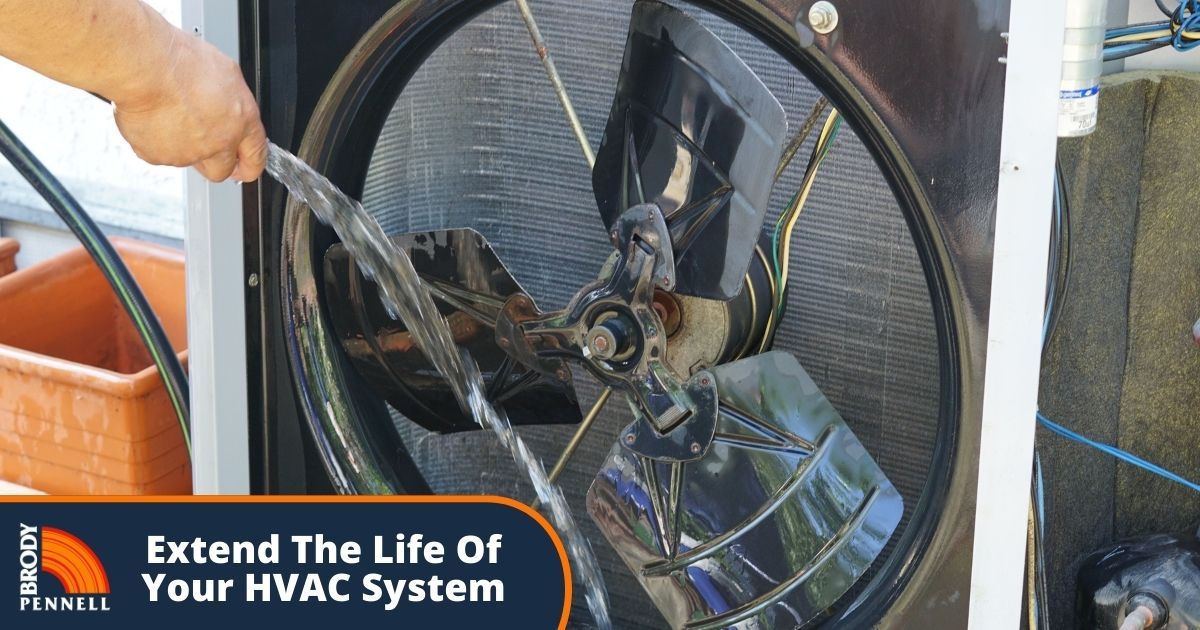
  • Rinse coils, fins, and external surfaces gently with low-pressure water to remove dust and sand.

  • Replace or clean your air filters again, as they’ll likely have collected a heavy load.

  • Wipe down motor housings and inspect electrical components for visible dust or corrosion.

  • Straighten any bent fins using a fin comb.

  • Check the condensate drain pan for leaves, sand, or clogs, and flush if needed.

  • Restart your system and listen carefully for unusual sounds or restricted airflow. If you notice problems, call a professional technician.

Why Proactive Care Matters

Neglecting the impact of Santa Ana winds can shorten the life of your HVAC system, drive up energy bills, and increase the chance of sudden breakdowns. At Brody Pennell, our team specializes in identifying and repairing wind-related damage. During seasonal maintenance, we thoroughly clean coils and fins, inspect wiring, and ensure your system is ready to perform efficiently—even during the toughest Santa Ana events.

When the next windy season rolls in, give yourself peace of mind. Schedule a maintenance visit with Brody Pennell Heating & Air Conditioning, and we’ll help keep your HVAC system safe, clean, and running at its best.

A Los Angeles home that has left their AC on while on vacation.

Can You Leave Your AC on While on Vacation? Here’s the Best Setting

Many homeowners face this dilemma before heading out on vacation: “Should I turn off my AC to save on energy bills, or keep it running?” It’s a common question, especially during Los Angeles summers when energy costs can spike and every dollar counts.

The short answer might surprise you: yes, you should leave your air conditioner on while away, but at a higher temperature setting. Extreme heat and humidity can cause serious damage to your home, belongings, and even your HVAC system itself. The key is finding the right balance between energy efficiency and home protection.

Using local expertise and proven strategies, this guide from us at Brody Pennell will help you determine the optimal thermostat setting for your LA home while you’re away, ensuring you return to a comfortable space without breaking the bank.

Why Leaving Your AC On Actually Matters

Humidity Control and Mold Prevention

Your HVAC system does more than just cool the air—it actively manages indoor humidity levels. When you turn off your air conditioner completely, moisture can quickly build up, creating the perfect environment for mold and mildew growth. This is particularly concerning in areas with higher humidity, but even LA’s relatively dry climate can experience humidity spikes.

Mold doesn’t just create unpleasant odors; it can cause structural damage to your home and pose serious health risks. Wood fixtures can warp, drywall can deteriorate, and once mold takes hold, removal can be expensive and time-consuming.

Protecting Your Belongings

Electronics, wooden furniture, musical instruments, and even food items are vulnerable to extreme temperature fluctuations. Heat can cause electronics to malfunction, wood to crack or warp, and perishable items to spoil faster than expected. If you have houseplants, they’re also at risk in an overheated home.

The cost of replacing damaged belongings often far exceeds the energy savings from turning off your air conditioner entirely.

Avoiding System Strain

When you return from vacation to a sweltering house, your air conditioner must work overtime to bring the temperature back down to a comfortable level. This sudden, intense workload puts significant strain on your system, potentially leading to breakdowns and reducing its overall lifespan. The energy required to cool an extremely hot house often exceeds what you’d use to maintain a moderate temperature while away.

Best Thermostat Settings While on Vacation

General Expert Recommendations

HVAC professionals consistently recommend raising your thermostat by 7-10°F above your normal setting when leaving for vacation. If you typically keep your home at 72°F, setting it to around 79-82°F strikes the right balance between energy savings and home protection.

For most vacation scenarios, the ideal range falls between 78°F and 82°F for short trips. For extended stays of two weeks or longer, you might push it to 85°F, but this should be the absolute maximum to prevent damage.

Local Insight for Los Angeles Homes

Los Angeles benefits from a Mediterranean climate with generally lower humidity than many other regions, but this doesn’t mean you should turn off your AC completely. The city’s summer temperatures can still reach the 90s, and inland areas often exceed 100°F.

For LA homeowners, targeting around 78°F during summer vacations provides optimal efficiency. This setting accounts for the region’s dry heat while ensuring your home stays protected. The relatively mild evenings help reduce the system’s workload, making this temperature both practical and economical.

Always keep your air conditioner running during longer absences, even in LA’s dry climate. Humidity control remains essential for preventing damage and maintaining air quality.

When It Might Be Okay to Turn Your AC Off

Very Short Absences

If you’re only leaving for a few hours, the energy savings from adjusting your thermostat are minimal. Your system uses more energy cycling on and off frequently, so maintaining a consistent temperature is often more efficient for brief outings.

Extended Vacations with Ideal Conditions

In rare cases, you might consider turning off your air conditioner for extended periods if your home has exceptional insulation and you’re traveling during cooler months. However, this approach carries significant risks and generally isn’t recommended, even for well-insulated LA homes.

The potential for unexpected weather changes, humidity buildup, or system issues makes this strategy too risky for most homeowners.

Smart Strategies for Maximum Efficiency

Programmable and Smart Thermostats

Modern thermostats offer the perfect solution for vacation temperature management. You can program automatic setbacks for your departure and schedule the system to cool your home before you return. Smart thermostats even allow remote monitoring and adjustments via smartphone apps.

These devices pay for themselves through energy savings and offer peace of mind through remote monitoring capabilities.

Optimize Your Fan Settings

Set your thermostat fan to “Auto” instead of “On” before leaving. The “Auto” setting runs the fan only when cooling is needed, reducing energy consumption and preventing unnecessary humidity circulation.

Prepare Your Home for Departure

Close blinds and curtains to block solar heat gain, seal any air leaks around windows and doors, and consider unplugging non-essential electronics to reduce internal heat generation. These simple steps can significantly improve your AC’s efficiency while you’re away.

Expert Takeaways for LA Homeowners

The smartest approach for Los Angeles homeowners is to set your thermostat to “Auto” cooling mode with a temperature around 78°F for most summer vacations. Never turn your air conditioner completely off, regardless of the season or duration of your trip.

A 7-10°F setback from your normal temperature provides substantial energy savings without risking damage to your home or belongings. For maximum convenience and control, investing in a programmable or smart thermostat offers long-term benefits beyond just vacation settings.

Make the Smart Choice for Your Home and Air Conditioner

Leaving your AC on at a higher setting while on vacation protects your investment, saves money in the long run, and ensures you return to a comfortable home. The energy savings from this approach, combined with avoiding potential damage costs, makes it the clear winner over turning your system off entirely.

Ready to optimize your home’s comfort system? Consider upgrading to a smart thermostat or scheduling a consultation to ensure your HVAC system is running at peak efficiency for both daily use and vacation settings.

Do You Need a Bigger AC Unit? (Not Always – Here’s Why!)

When it comes to air conditioning, bigger isn’t always better. At Brody Pennell Heating & Air Conditioning, we help homeowners in Los Angeles avoid oversizing mistakes by relying on proven industry standards and decades of expertise.

Why Bigger AC Units Can Backfire

Choosing an oversized AC unit may seem like a safe bet—but in reality, you could be inviting costly issues:

  • Short cycling: Big units cool fast and shut off prematurely, leading to frequent switching on and off, which increases wear and tear.
  • Poor humidity control: Quick cool-downs prevent proper dehumidification, potentially creating a damp, uncomfortable home environment—even mold growth. 
  • Increased utility costs: Oversized systems don’t run efficiently, often costing more in the long run despite higher upfront capacity.

The Right Way to Size Your AC: Heat Load Calculations

Size matters—but not by guesswork. Brody Pennell relies on Manual J heat load calculations, the professional standard:

  • Factors like sunlight exposure, insulation quality, window types, and occupancy are evaluated—not just square footage.

  • This ensures your system is neither too small nor too large—but perfectly tuned to your home’s needs.

Benefits of Professional, Precise Sizing

Choosing the right unit size—and having it installed by experts—delivers real advantages:

  • Optimal comfort: Even temperature distribution and consistent cooling throughout your home.

  • Better energy efficiency: Properly matched systems run efficiently, lowering monthly bills.

  • Extended equipment life: Fewer cycles mean less stress, fewer repairs, and greater longevity.

  • Dehumidified, healthier air: Longer run times ensure moisture is extracted, keeping your home comfortable.

Why Trust Brody Pennell for Your AC Needs

As a trusted Los Angeles HVAC authority since 1945, Brody Pennell brings unparalleled experience to every job:

  • Carrier Factory Authorized Dealer with over 80 years in LA!

  • Technicians who bring professionalism into your home—think collared shirts, shoe covers, and transparent service.

  • Clear pricing and honest advice—like using Manual J, not rule-of-thumb sizing.

What to Do Next

  1. Request a free sizing consultation—Brody Pennell’s experts will perform a full heat-load assessment tailored to your LA home.

  2. Upgrade wisely, if needed—choose a unit that matches your home’s requirements, not just its size.

  3. Schedule regular maintenance—optimizes efficiency, maintains warranties, and keeps you comfortable year-round. 

If you’re questioning whether a bigger AC is better—the answer might surprise you. Properly sizing your unit using professional methods ensures efficiency, comfort, and durability. With Brody Pennell’s legacy of quality and precision, you’re in expert hands every step of the way.

Is Your AC Ready for Fire Season?

Fire season in Los Angeles brings more than just visible flames on distant hillsides. Wildfire smoke and ash can travel hundreds of miles, turning your home’s indoor air into a health hazard. For Los Angeles residents, preparing your HVAC system for fire season can make the difference between breathing clean air and struggling with smoke-related health issues.

Your heating and cooling system serves as your home’s first line of defense against wildfire smoke. When properly prepared, it filters out dangerous particles and keeps your indoor air clean. However, when neglected, it can actually make the problem worse by pulling contaminated outdoor air directly into your living spaces.

Why Fire Season Threatens Your Indoor Air Quality

Wildfire smoke contains a dangerous mix of fine particles, carbon monoxide, and volatile organic compounds. These microscopic particles easily slip through standard door and window seals, gaps in your home’s construction, and most importantly, through your HVAC system if it’s not properly equipped.

These particles are so small that they can penetrate deep into your lungs and even enter your bloodstream. What makes this particularly concerning is that indoor air can actually become more polluted than outdoor air during fire season, especially if your HVAC system is pulling in contaminated air from outside.

Signs Smoke Is Impacting Your Home

Watch for these warning signs that wildfire smoke is affecting your indoor air quality:

  • Persistent smoky smell that lingers even with windows closed
  • Allergy-like symptoms such as coughing, sneezing, or headaches
  • Visible ash or dust accumulating around air vents
  • Increased dust buildup on surfaces despite keeping windows closed

If you notice any of these signs, it’s time to take immediate action to protect your indoor air quality.

How to Protect Your Indoor Air Quality During Fire Season

Upgrade to High-Efficiency HVAC Filters

Standard 1-inch filters simply can’t trap the smallest smoke particles that pose the greatest health risks. Upgrading to MERV 13 or higher filters can capture particles as small as 0.3 microns, including most wildfire smoke particles. Investing in a portable or whole-home air purifier rated for wildfire smoke can help, too.

However, not all HVAC systems can handle high-efficiency filters without modifications. The experts at Brody Pennell can assess your system and safely install the right filter for your setup, ensuring optimal air quality without damaging your equipment.

Seal and Insulate Your Ductwork

Leaky ductwork is one of the main ways contaminated air enters your home during fire season. Gaps in ducts, especially in attics or crawl spaces, can pull smoky air directly into your living spaces.

Professional duct sealing not only improves air quality but also increases your system’s efficiency. Brody Pennell’s technicians use advanced techniques to identify and seal these hidden leaks.

Use Recirculate Mode on Your Thermostat

During high-smoke days, switch your thermostat to “recirculate” mode to stop pulling in outdoor air. This setting allows your system to filter and clean the air already inside your home without introducing new contaminated air from outside.

Check your thermostat manual or contact Brody Pennell for guidance on the proper settings for your specific system.

Install an Air Purifier or Air Scrubber

Whole-home air purification systems work alongside your HVAC system to actively remove smoke particles, odors, and other contaminants. These systems can capture particles that even high-efficiency filters might miss.

Modern air scrubbers can eliminate up to 99.9% of airborne particles and significantly reduce smoke odors, providing an extra layer of protection for your family’s health.

Schedule a Pre-Season System Check-Up

Before fire season begins, ensure your AC and ventilation systems are clean and functioning properly. Dirty coils, clogged filters, and other maintenance issues can reduce your system’s ability to filter air effectively.

A professional maintenance visit from Brody Pennell includes cleaning all components, checking filter conditions, and ensuring your system is ready to protect your indoor air quality when you need it most.

Why This Matters for Los Angeles Residents

Los Angeles faces some of the longest and most intense fire seasons in the country. Combined with the area’s dense population and unique geography, residents face greater exposure risks than many other regions.

Children, elderly residents, and people with respiratory conditions are particularly vulnerable to poor air quality. Protecting your indoor air isn’t just about comfort—it’s about safeguarding your family’s health during increasingly frequent fire seasons.

Brody Pennell has been serving Los Angeles families since 1945, and we understand the unique indoor air quality challenges facing Southern California residents. Our team knows exactly what works best for local homes and conditions.

Take Action Before Fire Season Arrives

Don’t wait until smoke fills the air to protect your family’s health. Schedule a Fire Season AC and Indoor Air Quality Assessment with Brody Pennell today. Our experienced technicians will evaluate your current system, recommend the best solutions for your home, and ensure you’re prepared for whatever fire season brings.

For comprehensive indoor air quality services and maintenance agreements that keep your system running at peak performance year-round, contact Brody Pennell at (424) 258-9348 or schedule your consultation online.

Your family’s health is too important to leave to chance. Prepare your home’s air quality defense system today.

Your AC Works, But Your Home Feels Humid – Here’s What’s Wrong

You set your thermostat to 72 degrees, your AC unit hums along steadily, and the temperature reads exactly where you want it. So why does your Los Angeles home still feel sticky and uncomfortable? If you’re dealing with this frustrating situation, you’re not alone—especially during Southern California’s warmer months when humidity can make even a cool home feel muggy.

The truth is, your air conditioning system should do more than just cool the air. When working properly, it should also remove excess moisture, leaving your home feeling crisp and comfortable. If humidity is still an issue, there’s usually a specific reason behind it, and fortunately, most of these problems have straightforward solutions.

What Your AC Should Actually Do

Your air conditioning system has two main jobs: cooling your home and controlling humidity levels. As warm air passes over the evaporator coils, the system removes both heat and moisture. The cooled, dehumidified air then circulates throughout your home, while the extracted moisture drains away through your AC’s condensate system.

When everything works as designed, your home should feel cool, dry, and comfortable. But when humidity control fails, even a perfectly cool house can feel clammy and unpleasant.

Why Your AC Isn’t Controlling Humidity

Your System Is Oversized

Bigger isn’t always better when it comes to air conditioning. An oversized system cools your home too quickly, causing it to cycle on and off frequently. This short cycling means the system doesn’t run long enough to properly remove humidity from the air.

This problem is particularly common in Los Angeles, where older homes have often been retrofitted with newer, more powerful units without proper load calculations.

Dirty or Frozen Evaporator Coils

Your evaporator coils are responsible for removing moisture from the air. When these coils become dirty or frozen, their ability to extract humidity drops significantly. This issue often stems from clogged air filters, low refrigerant levels, or lack of regular maintenance.

Poor Airflow and Duct Issues

Blocked vents, leaky ductwork, or inadequate air circulation can all impact your system’s dehumidification capabilities. Leaky ducts are especially problematic because they can pull humid air from attics, crawl spaces, or other unconditioned areas.

Incorrect Thermostat Settings

Using the wrong fan setting can actually work against humidity control. Setting your thermostat fan to “On” instead of “Auto” causes the system to circulate air continuously, which can reintroduce moisture that was previously removed.

An Aging or Inefficient System

Older AC systems simply weren’t designed to handle humidity as effectively as modern units. With Los Angeles’s fluctuating climate conditions, an aging system may struggle to maintain proper moisture control.

Solutions for Better Humidity Control

Schedule a Professional AC Inspection

The first step is identifying the root cause of your humidity problems. A qualified technician can check refrigerant levels, inspect your ductwork for leaks, and determine if your system is properly sized for your home.

Install a Whole-Home Dehumidifier

A whole-home dehumidifier works alongside your existing HVAC system to remove excess moisture more effectively. This solution is particularly beneficial during Los Angeles’s muggy heat waves or for homes located near the coast.

Prioritize Routine Maintenance

Regular maintenance keeps your system running efficiently. Clean filters, coils, and drains all contribute to better humidity removal. Joining a maintenance program ensures your system receives consistent care year-round.

Consider a Modern System Upgrade

If your AC unit is more than 10 years old, upgrading to a modern, variable-speed system can dramatically improve humidity control. Today’s high-efficiency systems offer superior moisture removal compared to older models.

The Hidden Costs of High Humidity

Ignoring humidity problems can lead to serious consequences beyond just comfort issues. High indoor humidity promotes mold and mildew growth, which can damage your home and trigger health problems. It can also warp wood floors, damage furniture, and force your AC system to work harder, driving up energy costs.

Trust Los Angeles’s HVAC Experts

For over 80 years, Brody Pennell has been helping Los Angeles homeowners solve their comfort challenges. Our experienced technicians understand the unique climate conditions in Southern California and can provide expert recommendations tailored specifically to your home’s needs.

Don’t let humidity problems compromise your comfort any longer. Schedule an AC inspection today to identify and resolve the root cause of your humidity issues. Consider joining our maintenance program to keep your system running efficiently year-round.

Your home should be your comfortable retreat from Los Angeles’s heat and humidity. Let Brody Pennell help you achieve the cool, dry comfort you deserve.

Mini-Split vs. Central Air: What’s Better for Your LA Home?

Southern California summers are no joke. When the sun blazes and the temperatures in Los Angeles soar, having an efficient and reliable cooling system is absolutely essential. But when it’s time to choose or upgrade your system, the big question often arises: Should you stick with central air or make the switch to a ductless mini-split?

Quick Overview: What’s the Difference?

It’s important to understand how central air and mini-splits work.

Central Air Conditioning

Central air systems use a single unit to cool the air, which is then distributed throughout your home via ductwork and vents. These systems are controlled by a single thermostat, maintaining consistent temperatures in all rooms.

Ductless Mini-Split Systems

Mini-splits have both indoor air handlers (installed in specific rooms or zones) and an outdoor unit. They don’t require ductwork and allow for zoned cooling, meaning each area can have its own thermostat or remote for independent temperature control.

Pros of Central Air

  • Whole-home cooling: With just one unit, you can maintain a consistent, comfortable temperature throughout your home.
  • Aesthetic appeal: Central air systems are hidden behind walls, with only discreet vents in sight.
  • Utilizes existing ductwork: If your home already has ducts, installation is more straightforward and cost-effective.

Pros of Ductless Mini-Splits

  • No ducts needed: Ideal for homes without existing ductwork or for spaces like garages or new additions.
  • Energy efficiency: No duct losses mean better efficiency and lower utility bills.
  • Zoned cooling: Cool specific rooms to your desired temperature without wasting energy on spaces you don’t use.
  • Ease of installation: Mini-splits require less time and intrusion to install compared to central air systems.

Ideal Scenarios for Each System

Not every home is the same, and your choice will depend on factors like its layout, age, and cooling needs. Here’s a quick guide to ideal scenarios for central air vs. ductless mini-splits in Los Angeles:

When Central Air Makes Sense:

  • Your home already has operational ductwork.
  • You prefer a seamless, hidden system with minimal visible components.
  • You want to cool the entire home uniformly without bothering with individual zones.

When Mini-Splits Are the Better Choice:

  • Your home lacks ductwork (common in many older LA homes).
  • You’re converting a garage, attic, or building an addition.
  • Zoned cooling is a priority to save energy and customize comfort for each room.
  • You want to install a system with dual cooling and heating capabilities (perfect for LA’s mild winters).

Considerations Unique to Los Angeles Homes

When deciding between central air and mini-splits, keep in mind the unique aspects of LA homes and the region’s climate:

Age of Homes

Many older homes in Los Angeles don’t have existing ductwork or have outdated HVAC systems. Mini-splits are a practical solution for homeowners who want modern cooling without tearing up walls.

Energy Efficiency

Los Angeles has some of the highest energy costs in the country, making efficiency a top priority. Mini-splits are known for their energy-saving benefits compared to central systems with potential duct losses.

Year-Round Comfort

While summers can be scorching, LA winters are mild. Mini-splits that double as heat pumps can provide efficient heating on cooler days, making them a year-round solution.

Local Incentives

LA homeowners may have access to rebates or incentives for installing energy-efficient systems. Be sure to check local programs to reduce your overall installation costs.

How Brody Pennell Can Help You Decide

At Brody Pennell, we understand that choosing the right cooling system isn’t a one-size-fits-all decision. That’s why we’re here to help.

  • Free Home Assessments: We’ll evaluate your home’s unique layout and cooling needs.
  • Tailored Recommendations: Whether you lean toward central air or mini-splits, we’ll recommend solutions that align with your comfort goals and budget.
  • Expert Installation: Our experienced team installs both high-efficiency central air systems and ductless mini-splits with precision.
  • Professional Maintenance: Keep your system running smoothly with our comprehensive maintenance plans.

Find the Perfect Cooling Solution for Your LA Home

Choosing between a mini-split and a central air system ultimately comes down to your home’s specific needs. Mini-splits excel in delivering targeted, energy-efficient comfort, while central air provides seamless, whole-home cooling. Both options can enhance your home’s comfort, leaving you to enjoy LA’s sunny days without breaking a sweat.

If you’re still unsure which option is right for you, get in touch with Brody Pennell for a free consultation. Our experts will guide you every step of the way to find the perfect cooling solution for your Los Angeles home.